
Who We Are

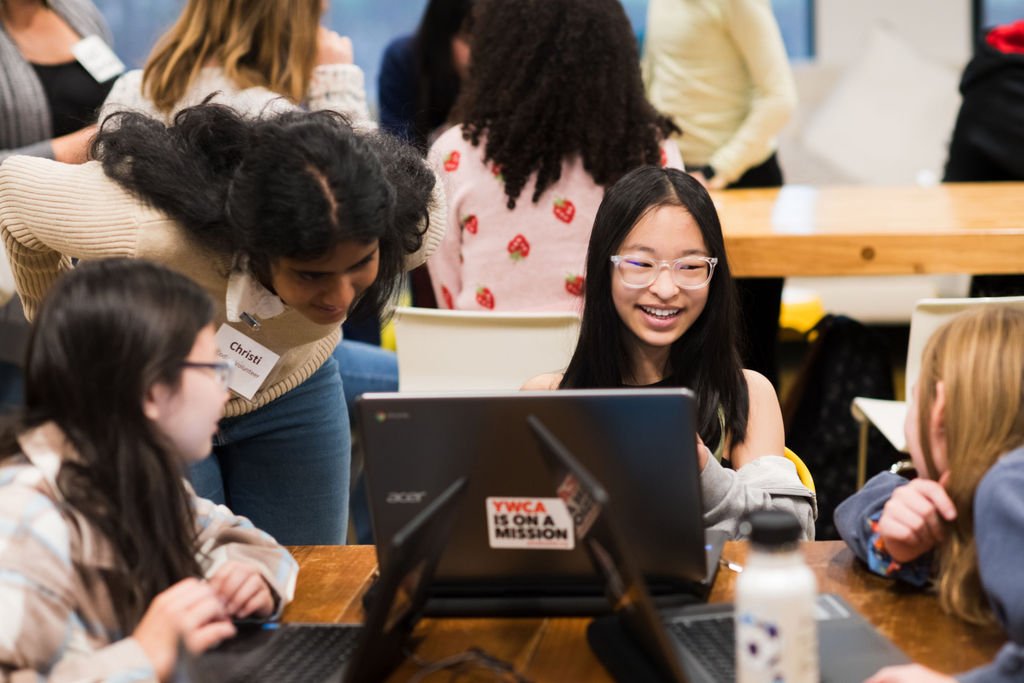
YWCA Boulder County is dedicated to eliminating racism, empowering women, and promoting peace, justice, freedom, and dignity for all.
YWCA is proud to be the oldest and largest women’s movement, providing services for women and their families in our community.
Our local Boulder County programs and services have furthered the YWCA vision of peace, justice, freedom, and dignity for all people since 1922. For more than 100 years, our programs have evolved to meet the current, pressing needs of the community.

Key Dates in YWCA Boulder County History
YWCA Boulder County acknowledges that the land where we live today is the unceded territory of Hinóno’éí (Arapaho), Tsistsistas (Cheyenne), and Nuciu (Ute) nations. As we reflect on the history of YWCA Boulder County, let us remember that the Boulder Valley is home to the Hinóno’éí, Tsistsistas, and Nuciu people and to many other tribes that also camped, hunted, and traded here for centuries. And that Native people of many Indigenous nations live here today.
For more than 100 years, YWCA Boulder County has been at the forefront of the most critical social movements and has helped women, children and families in Boulder County to thrive. Our organization has shown up for our community time and time again. You can count on us to continue to serve our community for the next 100 years…and beyond.



FAQs
-
When you make an unrestricted cash donation to YWCA Boulder County, you may be able to reduce your taxes through the Colorado Child Care Contribution Credit, which decreases the after-tax cost of gifts by more than 50%.
If you qualify, half of your donation to YWCA Boulder County will be offset by a dollar-for-dollar credit against your Colorado income taxes. In addition, you will still be able to claim your full contribution as a charitable deduction on your federal and state income tax returns if you itemize deductions.
Read more about the ways to donate and the CO Child Care Tax Credit here.
-
As an inclusive, secular nonprofit organization, YWCA Boulder County is publicly funded, not affiliated with any religious group, and we welcome people of all backgrounds and genders to participate in our important work.
We are more than an acronym. While our acronym suggests we are a faith-based organization, in 2015 YWCA USA changed the name from “Young Women’s Christian Association of the United States of America, Inc.” to “YWCA USA, Inc.”.
YWCA Boulder County is a federated organization with sister YWCAs across the United States, and we are proud to be the oldest and largest women’s movement, providing services for women and their families in our community and across the country.
YWCA is a completely independent organization and not affiliated with YMCAs in Boulder County or elsewhere in the country.
We help every person who reaches out regardless of their religion, race, age, and gender. Read more about YWCA USA’s history here.
-
YWCA Boulder County does not provide supportive housing. Please contact:
EFAA’s Housing Program supports families with children under the age of 18 who are experiencing homelessness. EFAA strives to help as many families as possible, but assistance is dependent on the number of units available. If you live in the City of Boulder and want to learn more about the program and see if you qualify, call EFAA’s front desk at (303) 442-3042. If you live in the Mountain Communities of Boulder County, call (720) 422-7813.
For families experiencing homelessness living in Lafayette, Louisville, Erie, and Superior should call Sister Carmen at (303) 665-4342 to see if you qualify for assistance.
Longmont, Lyons, Niwot and Allenspark should call OUR Center at (303) 772-5529 to see if you qualify for assistance.
Financial Statements
YWCA is on a mission to eliminate racism and empower women, and we’re committed to accountability and transparency in everything we do. Below you will find resources that illuminate our financial position, outline how we allocate our resources, and showcase the impact of the valuable support from our donors and sponsors. As a nonprofit 501(c)(3) organization, we welcome your support of our mission!