Curtis K Rogers Talks to the YWCA about his Play, 13 Fires
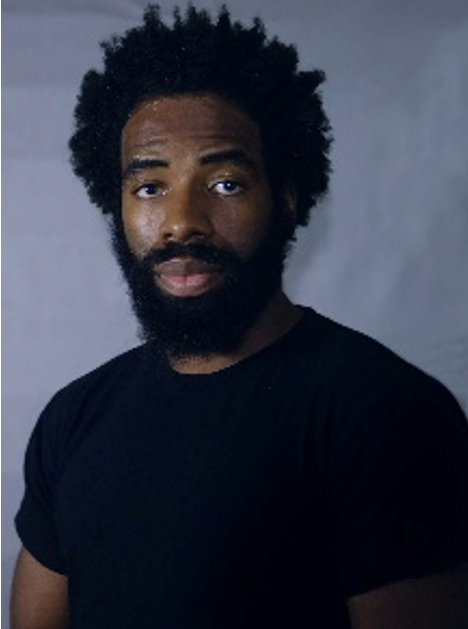
Curtis K. Rogers:
I am Curtis K. Rogers, 32 year old playwright. I use he/him pronouns. I'm originally from Indianapolis, born and raised there, and theater and acting had become a large part of my life in my late 20s. I started performing in plays as a way—I didn't realize it at the time—of healing, as a way of just growing deeper into my racial identity. A lot of the plays that I was in were really focused around black stories and black history, being someone that was adopted, I didn't get very much exposure to that, just the typical—slavery, then civil rights, and then King, and that was it. This is what I grew up with, but there was always just this feeling that there was more happening in the world that I just wasn't privy to. And then when I started getting into theater, and we were having nuanced conversations and storytelling around, you know, things like displacement or gentrification, and things like that, or just the progressive nature of America, and its, you know, capitalist ways of just life second, but money first. A lot of the plays that I was in were having discussions about those things, that was my first time, so it really resonated with that feeling of “what is it that's happening that I'm not seeing”. Theater was really able to open that up for me.
MV:
How did your play “13 Fires” come to be. What inspired you?
Curtis K Rogers:
How I came to write 13 Fires was interesting. The play is about the historically Black neighborhood in Indianapolis that used to be called Indiana Avenue, and it was like a light, a mecca of culture, you know, Black business entrepreneurship community. I feel like we use the term mutual aid now—but from what I read, and from my grandmother—to whom I used to talk to about what that time was like when she lived there—mutual aid was just normal practice. You know, childcare, neighbors were watching your kids on the corner and making sure things were safe, and everybody was safe. That's what the play is about. It's about that neighborhood, it's about the heart of that neighborhood, the intention behind the building of that neighborhood, the migration story of how that neighborhood came to be. You know, one of the characters is explaining to another character in the play that, you know, that when they came to Indiana Avenue in the early 1900s, it was because they were escaping lynchings that were happening in the South. Traveling up north, they found this area and built this beautiful community there. And then, you have Madam CJ Walker, who had her theater empire there. And I found this out through theater that Madam CJ Walker was connected to the Underground Railroad at a point in time, and folks would come, escaping the horrors of the South, landing in Indiana Avenue, and then she would help them start businesses. It became this bustling, thriving, historically rich place, you know, that really should have been preserved. This play was first actually shown at the Walker Theater.
MV:
Amazing.
Curtis K Rogers:
Yeah, so the university is kind of credited for destroying this neighborhood, because you know, they started their project in the 1920s, when IU came and started buying up all of the properties, employing eminent domain, pushing folks out, they started redlining, you know. No one was able to get loans to offset all of these changes and it was a lot of the university’s doing, and they've taken a lot of heat for that. I came to write 13 Fires because they were trying to make amends, they started funding a lot of art that was telling the story of what happened, which I think is a really beautiful thing. In fact, that university ended up buying the Walker Theater and using it to allow that story to be told, which I just think is a really good way to make amends. So one of the competitions I was a part of was for that, whoever wrote the best play about that time period would see it presented in that theater. That's how 13 Fires came about.
MV:
You won!
Curtis K Rogers:
Yeah. I did a lot of research and reading around that time of what happened, and it was like, you know how it is when there's history that swept under the rug, and that’s the rug you're standing on. I did not know that was there. When I got to reading the articles, they were talking about the tragedies when this type of bulldozing of a place people called home happened. It was really shocking. It wasn't just, we're buying everything up, moving things around. It was really placing the well-being of human beings at the total bottom of considerations when doing urban development.
MV:
And that happened also here, in Boulder.
Curtis K Rogers:
Yes, absolutely.
MV:
We moved an entire Black neighborhood out of Boulder to have a park. That’s the same type of things, we can look at Indianapolis, but we can also look right here. And so far, besides Katrina Miller’s documentary, This Is Not Who We Are, and if we listen to Minister Glenda Strong Robinson, it's not really talked about, we haven't, repaired and not even fully recognized the harm done.
Curtis K Rogers:
Totally, parallels all over the place, by design. I remember watching Katrina's film, This Is Not Who We Are, and talking about how Black people were relegated to that flooded area of Goss-Grove, and me, I'm with my partner, and we're looking at each other like, oh, we live in Goss-Grove. But yeah, even currently today, with the affordability of Boulder. It's like the pricing structure seems to really reflect what its original purpose was: not to have people of color in so many parts of the town, and keeping its majority white. And it’s interesting how this story came to Boulder. I didn't think that it would land, because it’s a different place. But then having so many conversations with folks from Boulder and from other parts of the US and realizing that it happens everywhere. It’s a total pattern. And it’s been going on for a very long time.
MV:
And it’s been happening in the Five Point area of Denver too.
Curtis K Rogers:
I've heard the Five Points area referred to as the Indiana Avenue of Colorado.
MV:
Why is it important for you that the first showing be on Juneteenth?
Curtis K Rogers:
I didn't grow up celebrating Juneteenth, I was totally unaware of it until my mid 20s. So then finding out about what it is, how it came about, just to me it's a remembering of where we are today. At the time of Juneteenth, slaves were released, those in power weren't letting people know, and the freedom date wasn't what it was supposed to be, and I look at today and ask: are we still free? Are we free now with what we live under? So it's a constant reminder of “it's not over”. Keep fighting, keep pushing, keep remembering our stories, keep resisting fascism and oppression and authoritarianism, not only of our physical reality, but of our minds, of our spirit, of our ability to connect with each other. All of those things are being threatened. Juneteenth, to me, is a time when we look at our past, we remember, we feel, we celebrate, and we move forward. We keep moving forward, but I am a firm believer that there is no true moving forward without looking at our past. These two things are intrinsically connected. So, yeah, that's why it's important. I feel like the story is that, and Juneteenth is a great day to be in community and live that.
MV:
And you're going to have, how many showings, and where are they going to be?
Curtis K Rogers:
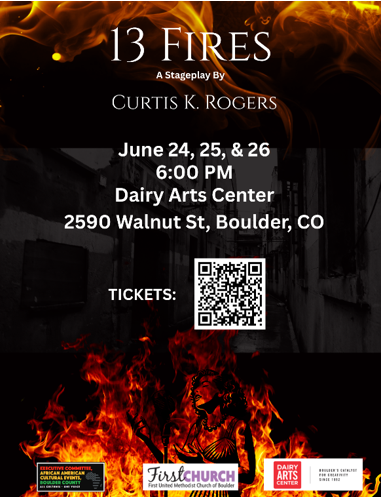
There will be five showings. One is going to be at the Longmont Theater Company on Juneteenth. I’m really excited. And then we have three performances at the Dairy Arts Center in Boulder on June 24th, 25th, and 26th. And we have a final performance August 8th at the Boulder Canyon theater of the main Boulder public library, and all of the performances are at 6PM.
MV:
Awesome. Thank you. Final words, when you were talking about Juneteenth, aren't you exhausted, fighting, looking at the past, fighting, moving forward, always being pushed back, moving, pushing against all this pressure?
Curtis K Rogers:
I was just talking with a friend about this, who's a phenomenal activist in Chicago. Shout out to Rain! We were just talking about this. Just the impossibility of beating this system. The odds are not on our side, but it's like, what else is there to do? Other than shoot holes through this wall, you know, even though the wall is closing in, and may crush us at some point in time. There's nothing else to do but to fight it, so I hear that it is exhausting for a lot of people, and that's totally valid, but I don't think that we come into this work expecting to actually stop the thing, right? I think that becomes exhausting if I'm like, I have to fix this, and it's not getting fixed, it's only getting worse. That's totally exhausting and draining, but if it's just: I have to move in this direction, and that's all I can do, and let go of the results, I find that to be less exhausting.
MV:
What would you say to our mostly White community, here in Boulder as your final words for this interview?
Curtis K Rogers:
I think the biggest thing is really understanding systemic inequality. Like really seeing it. Seeing the effects of it. Knowing the injustice of it. Understanding the privileges that come simply from being White because of systemic inequality. To me, I feel that if you’re blind to any of that, then you're already in the realm of white supremacy, because you're looking at the world and you're not understanding how the world came to be. As a Black man growing up in America, the impression was made upon me—even when we talk about neighborhoods and what's a Black neighborhood and what's a White neighborhood—you have Black neighborhoods in complete ruins, and then you have these really nice White neighborhoods. So it creates the impression in my young mind that White people are doing really, really well and Black people aren't. And if I'm not aware of the of the context of how that came to be, then inferiority and superiority is built in immediately. So, as a White person who lives in this world, I just think it's really important to understand systemic inequality. It's a real thing to sit around and think: “oh, everybody can pick themselves up by their bootstraps, and if you're living this way, that's totally your own fault.” I think it’s extremely dangerous. The first part, is understanding, being open to understand what has happened before you. Not having to, you know, riddle yourself with guilt about what's occurred, but just understanding and being informed. And from that place, then you can decide what is yours to do.
Performance Information
There will be a total of five performances across Boulder County. Most performances will be followed by talkbacks with the director and cast. Actor bios and additional details will be available on this site soon.
June 19, 2026 – Longmont Theatre Company
513 Main St, Longmont, CO 80501
Showtime: 6:00 p.m.
June 24–26, 2026 – Dairy Arts Center
2590 Walnut St, Boulder, CO 80302
Showtime: 6:00 p.m. each evening
Tickets: https://thedairy.org/series/13-fires-june-24-26/
August 8, 2026 – Boulder Public Library (Canyon Theater)
1001 Arapahoe Ave, Boulder, CO 80302
Showtime: 6:30 p.m.