
History Doesn’t Repeat but It Rhymes: YWCA Interview with Lora Hansen-Beard of 13 Fires
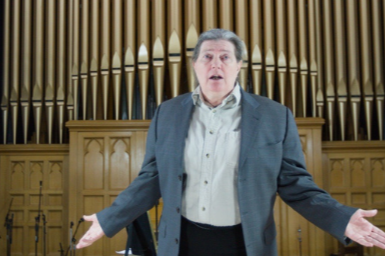
Photo by: Alexei Wood
Lora Hansen-Beard talks to YWCA Boulder County about her role in 13 Fires and patterns to continuously push some people down.
MV
Hi Laura, please tell us a bit of who you are and how you came to act in Curtis Rogers’ play, 13 Fires.
Lora Hansen-Beard
My name is Lora Hansen-Beard and I play the character of Bill Bondman in the play 13 Fires. Curtis Rogers directed and wrote it. I had been residing in a temporary shelter and there was a casting request flyer, and basically it said, “come try out”. I found this very interesting.
And that was how I got a hold of the idea of going to do this. I just said, well, why not? I was apparently the first person that actually turned up in person to audition. I didn’t know anything about what it was until I got there and was told that it was based on or inspired by true events that had occurred in the 1950s. I was thinking it was something more modern, kind of thinking wildfire, this kind of thing. That was where I was going with it.
When I was told that it was this historic play, I was like, “Oh, really?” I’ve always been bringing the idea of justice and all of that. So that was what really motivated me to continue with it.
They first put me in the role of the secretary, which was Carol, and it was a very small part. They had told me it was a predominantly Black cast because of the time and place it was taking place. And then we were working along with it, and they just were having some difficulty finding someone to fill the role of Bill Bondman, the landlord, and I said, well, you know, maybe me.
And so there was kind of back and forth: “Oh, maybe we’ll change it to a landlady rather than a landlord”. And I was like, oh no, no, let’s, let’s go with this. And it worked out. And I really enjoyed having that experience.
MV
You even cut your hair for it.
Yes. My hair was very long and everyone was very surprised when I proposed that I do that. Me personally, I don’t mind short hair, but it was quite surprising to a lot of people.
MV
Had you done acting before? Was that your first role?
Lora Hansen-Beard
Acting as a whole scene? For me being the principal person in the scene, yeah, this was my first time doing that. But I had been on stage with singing, usually choir. I was a solid tenor in the church choir, kind of thing. Also early on dancing. Dancing, of course, does require acting in some cases, but not a whole thing of me personally being a character in a play, speaking.
MV
What kind of dancing did you do?
Lora Hansen-Beard
When I was younger, it was mostly tap. I did go a little bit into the modern dance. It wasn’t really my thing. When I became an adult, and this was when I was in college, I was semi-professional in Middle Eastern dancing, and that has been more my speed. And folk dancing too for fun, not on stage, just as a fun thing.
MV
Going back to 13 Fires, working with an all-Black cast and learning about the Black history of Indiana Avenue in Indianapolis, and all that happened, what did that bring to you in terms of awareness or in terms of your own growth in racial awareness?
Lora Hansen-Beard
I had been aware of it in history. I’ve always done history, and I’ve often said it, history is very hit and miss. You get one thing in history and a thousand other things happened that aren’t because they didn’t hit the history books. Because you can only do so much, you can only say so much, you can only remember so much. And writing, whoever has the pen has the power. So a lot of the things did not get recorded, but I knew there was something across time and space of different histories that weren’t illuminated. And when this came up, it was like, “yep, that’s one more.” I looked across time and space, and it did seem to be that this was the one thing that I noticed over time and space. The capitalism, when it was given to the people and people ran businesses, we said it in the play, James says it, you know, the businesses were taking care of the health of the community.
People had small businesses, jazz clubs and restaurants, and those were the first things that were always attacked. 1956 was only one example, and a very, very loud and violent example, but often, it was quiet.
Something we did a lot of times with Boulder and Longmont. Certainly in the Western Slope when I was there, it wasn’t something I’d fully paid attention to, but it was certainly the farming. Small black farmers were crushed, chased off, but not violently. There were no crosses, there were no anti-black overt things. It was bureaucracy, it was lack of funding, lack of support, outright boycotts in some cases. And it’s still happening today. It’s been way back when sometime and up to right now—it is continuing, maybe more politely, shall we say. Or undercover.
MV
What do you think you have learned in that process? Not only in the process of acting and learning to act in a more wholesome way, but also about the story and about what you knew, what you didn’t know, the blindness that as white people we might carry, for example.
Lora Hansen-Beard
Overall for me, I pulled—I was raised in Wyoming, and people would laugh and say, “You probably didn’t ever see a Black person,” but yes, we did. There were plenty of people. I recall as a child—this is just one of my memories as a child—for my birthday, I was allowed to go to Rocky’s, which was basically a general store, and there was a whole aisle of dolls. And he said, “Pick any one you want.” And I picked a black baby doll. In the middle of northwest Wyoming. I named her Edie. After my cousin Eddie. I couldn’t quite say Edie, so everybody wound up calling the doll Eddie for some reason. That was my choice.
And I remember that choice being there. And as I grew, I looked at both my grandfather and then later my stepfather, and both of these men were kind of inspirations for me to work with this part.
And I watched them change. I wasn’t consciously doing this, I was just living my life, but looking back on it now, I saw them changing once they were exposed to something that they had never been exposed to. And I’m not exactly sure how I got exposed to all of this either, but I did somehow. And brought it to them, and they changed once they had more awareness. So I learned that being open and being aware can be much more for anybody.
MV
What did this play teach you? What did you learn?
Lora Hansen-Beard
I’ve always been a person that just likes to absorb information and make connections. So, it taught me a great deal of stretching because, yes, that role was something that I hadn’t ever done before. Just the acting itself, and then bringing to light a story that had been lost in the shadows, that hadn’t really been brought forward. In Indianapolis—sure, maybe in the local area it was well known, but to bring that awareness that this happened and continues to happen. And the reason that it probably continues to happen is because we aren’t paying enough attention to what has happened.
It brought the old line that, you know, history doesn’t repeat but it rhymes. And when you get that pattern and you understand the pattern you can move things. This is not something that has to happen.
The things that we presented, and the many other ones that both are known and unknown, they don’t have to happen. We can bring them into our awareness, we can look at the pattern, and we can choose to change that pattern. But it has to be a choice, and it has to be an effort. It isn’t going to do that on its own.
MV
Did you find a relationship between that play that takes place in 1956 and Boulder today?
In Boulder today, yes, a mentality that has grown, actually. It isn’t just Black people or just that people or this people. There is an economic component that is pretty obvious. With poor people, it’s the idea that they need to be shepherded. It’s almost a reaction, you know. The play showed where there was neglect, and top-down pressure to ignore things. It’s almost a reaction to that that Boulder is having to come in and overdo, to go almost in the opposite direction.
MV
Can you tell me more about the reaction? It’s a reaction to what?
Lora Hansen-Beard
This was neglect of common sense and simple decency rules. Now, Boulder is kind of overreacting to. You know, there has to be a rule for everything. We can breathe only this way and this long and this high and this low. We must regulate what everything looks like. So instead of complete disregard of regulations, it has gone into over-regulation. And that’s what I’m seeing with a lot of things now.
MV
Do you find that despite all this over-regulation, as you call it, Boulder still discriminates against the same type of people?
Lora Hansen-Beard
It’s exactly the same. It’s two sides of the same coin. You can use neglect and disregard for regulation, and you can use overregulation to do the same thing. And that’s exactly what’s going on with a lot of it.
Neglect and not enough regulation, or overregulation and neglect of some people. Overregulation to serve as discrimination and ignore some people. It ignores people both ways.
MV
Is there something that you would like to conclude with?
Lora Hansen-Beard
Yes. What I would like to read something that I wrote, and in answer to the idea of what needs to be done. I’m not going to specifically say for a race or for Black and brown people, but it certainly includes Black and brown people, but it is mostly on the economic lines because that is where we need to step up a little bit and include a little more.
MV
That’s the heart of the problem.
Lora Hansen-Beard
Yes, and so I would conclude with this: “The poor need neither rescue nor reprimand. They need unfettered access to resources, not made into objects of contempt to make those currently with more feel superior. Pushing others down to rise up is to set up for failure. The only way to truly succeed is to bring all along on the journey, sharing the road, allowing each to define and obtain success as they see it.”
MV
Very nice. Thank you so much.
Lora Hansen-Beard
You’re quite welcome. Thank you for letting me.